

If you are over 60, you have probably been told to “eat more protein.” That advice is common — and for good reason. Protein helps your body maintain muscle, recover from everyday strain, and keep up with the tasks that matter: getting out of a chair, carrying groceries, climbing a few stairs, and feeling steady on your feet.
What often gets left out is the practical part. How much protein after 60 is enough? Do you need shakes? What if your appetite is smaller than it used to be? And how do you build a day of meals that feels realistic, not like a bodybuilder’s meal plan?
This guide walks through those questions in plain language. It is educational, not a personal prescription. Your needs can change with illness, kidney health, medications, and activity level — so use this as a starting map, then check big changes with your clinician or a registered dietitian.
Why Protein Matters More After 60
As we age, many people gradually lose muscle mass and strength. Clinicians often call this process sarcopenia. It does not mean you are “doomed” to get weaker. It does mean that the building blocks of muscle — including dietary protein — deserve more attention than they did at 40.
Protein supports more than muscle alone. It also plays a role in:
- Everyday strength for standing, walking, and lifting light loads
- Recovery after illness, surgery, or a stretch of low appetite
- Feeling fuller after meals, which can help with steady energy
- Supporting immune defenses as part of an overall balanced diet
Another quiet challenge after 60 is that muscles may respond a little less efficiently to the protein you eat. Researchers sometimes describe this as needing a clearer “signal” at each meal. Spreading protein through the day — instead of saving most of it for dinner — is one practical way many experts address that.
How Much Protein Do You Need After 60?
Official minimum guidelines for adults have long centered around about 0.8 grams of protein per kilogram of body weight per day. For many healthy older adults, though, expert groups such as the PROT-AGE Study Group and senior-nutrition resources suggest aiming a bit higher for muscle and function — commonly around 1.0 to 1.2 g per kg per day.
A simple estimate:
- Divide your weight in pounds by 2.2 to get kilograms.
- Multiply by 1.0 to 1.2.
Example: A 160-pound person is about 73 kg.
73 × 1.0 = about 73 grams per day.
73 × 1.2 = about 88 grams per day.
That range is a common target for many healthy older adults. Needs may be higher if you:
- Strength-train regularly
- Are recovering from illness, surgery, or unintentional weight loss
- Have been eating very little protein for a long time
Needs may be lower or carefully limited if you have significant kidney disease, especially advanced chronic kidney disease when you are not on dialysis. In that case, do not increase protein on your own — ask your clinician or renal dietitian first.
Think of numbers as a compass, not a rigid scoreboard. A few days of rough tracking (labels, simple portion estimates, or a free food app) is usually enough to see whether breakfast, lunch, and dinner are all contributing — or whether almost all your protein is arriving after 5 p.m.
Aim for Protein at Every Meal — Not Just Dinner
Many older adults eat a light breakfast (toast, fruit, coffee), a modest lunch, and then a protein-heavy dinner. That pattern is common, but it may leave morning and midday muscles under-fueled.
A helpful habit after 60 is to aim for roughly 20–30 grams of protein at each main meal, when that fits your appetite and medical guidance. You do not need to hit a perfect number every time. Consistency across the week matters more than one “perfect” day.
Practical portion cues (approximate):
- 3 ounces cooked fish, poultry, or lean meat (about a deck of cards): often ~20–25+ grams
- 1 cup plain Greek yogurt: often ~15–20+ grams (check the label)
- ½–1 cup cottage cheese: often ~12–25 grams depending on serving size
- 2 large eggs: about 12 grams
- ½–1 cup cooked beans or lentils: often ~7–15 grams
- 1 cup milk: about 8 grams
- 2 tablespoons peanut butter: about 7–8 grams
These are ballpark figures from common nutrition databases; brands vary, so labels win when you have them.
Best Protein Foods for Seniors (Simple and Flexible)
You do not need expensive specialty products to eat well. A mix of familiar foods usually works best — especially foods you already enjoy and can chew comfortably.
Animal-based options
- Eggs and egg-based dishes
- Fish such as salmon, tuna, cod, or sardines
- Chicken or turkey
- Lean cuts of beef or pork, if you tolerate them
- Greek yogurt, cottage cheese, milk, and cheese
- Soft options when chewing is harder: flaked fish, ground poultry, yogurt, cottage cheese
Plant-based options
- Beans, lentils, chickpeas, and split peas
- Tofu, tempeh, and edamame
- Nuts, seeds, and nut butters
- Quinoa and fortified soy milk
- Peanut butter on whole-grain toast (simple and filling)
Budget-friendly picks
Canned beans, eggs, frozen fish fillets, plain Greek yogurt (larger tubs), peanut butter, and lentils are often kinder to the grocery budget than specialty “senior protein” products.
Variety helps. Rotating animal and plant sources also brings fiber, healthy fats, and micronutrients that protein alone does not provide.
Easy Ways to Boost Protein Without Overhauling Your Diet

Small upgrades add up. Try one or two of these this week:
- Eat the protein first. Start with eggs, yogurt, fish, or beans before the bread or dessert.
- Upgrade breakfast. Add Greek yogurt, eggs, cottage cheese, or a spoon of peanut butter instead of carbohydrate-only mornings.
- Layer extras. Stir milk powder into oatmeal or creamy soup; add beans to salads and soups; sprinkle nuts or seeds on yogurt.
- Keep ready snacks. String cheese, roasted chickpeas, a small yogurt, a handful of nuts, or leftover chicken make afternoon dips easier to manage.
- Use convenient backups. When cooking feels hard, a simple tuna pouch, rotisserie chicken, or frozen vegetable-bean soup can still move you toward your daily goal.
- Mind appetite. If large plates feel overwhelming, try smaller, more frequent protein-containing meals or snacks.
If chewing, swallowing, dental issues, or low appetite make food difficult, tell your clinician. Soft textures, fortified foods, and — when appropriate — oral nutrition supplements can help, but they work best with professional guidance.
A Sample Day of Protein-Forward Meals After 60

This is an illustration, not a rigid menu. Adjust portions for your appetite, preferences, culture, and medical needs.
Breakfast (~25 g)
Two scrambled eggs, a slice of whole-grain toast with a thin spread of peanut butter, and a glass of milk — or plain Greek yogurt with berries and a spoon of chopped nuts.
Lunch (~25–35 g)
A turkey or chickpea sandwich on whole-grain bread with vegetables, plus a side of cottage cheese or yogurt; or a lentil soup with a piece of cheese and fruit.
Dinner (~25–35 g)
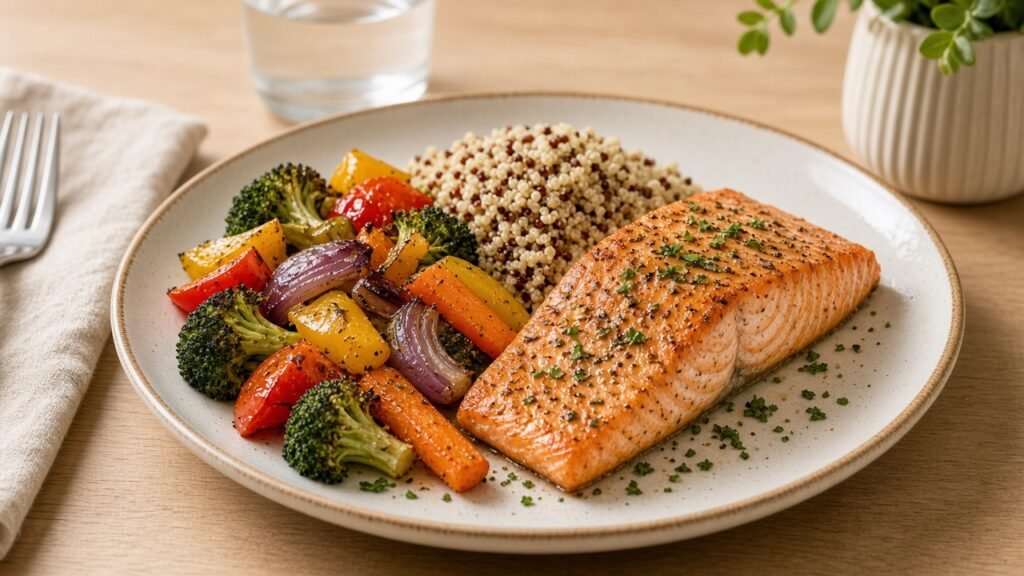
Baked fish or chicken with vegetables and a side of beans or quinoa; or tofu stir-fry with mixed vegetables over brown rice.
Snack (~10–15 g)
Greek yogurt, a small handful of almonds, roasted chickpeas, or cheese with apple slices.
You can swap foods freely as long as most eating occasions include a true protein source — not only starch and sweets.
Protein and Strength Training: Better Together
Protein gives your body building material. Gentle strength work tells your body to use it. After 60, pairing higher-protein meals with simple resistance habits — sit-to-stands, wall push-ups, light hand weights, resistance bands, or a supervised gym program — often supports muscle and independence better than either habit alone.
You do not need long workouts. Two or more short strength sessions a week, done safely and progressed gradually, can complement the nutrition side of this plan. If you have balance concerns, joint pain, or a recent fall, ask your clinician or a physical therapist how to start.
Do You Need a Protein Supplement?
Food first is a good rule. Many people can reach a helpful range with ordinary meals. Supplements (powders, ready-to-drink shakes, or high-protein puddings) can be useful when:
- Appetite is low
- Chewing or cooking is limited
- You are recovering from illness and need an easier boost
- Your clinician or dietitian recommends them
Tips if you use them:
- Prefer options with protein you actually need and without excessive added sugar when possible
- Use them with meals or as snacks — not as a full meal replacement unless advised
- Tell your clinician about any supplements, especially if you take medications or have kidney, liver, or metabolic conditions
Safety Notes: When to Slow Down and Ask for Help
Responsible protein advice always includes a few guardrails:
- Kidney disease: If you have reduced kidney function, get personalized targets before increasing protein.
- Unintended weight loss, weakness, or frequent falls: These deserve a medical check, not only a dietary tweak.
- Diabetes medications: Meal pattern changes can affect blood sugar; coordinate with your care team if you use insulin or certain diabetes drugs.
- Digestive discomfort: Increase fiber-rich plant proteins gradually and drink adequate fluids unless you are on a fluid restriction.
- No miracle claims: Protein supports healthy aging; it does not reverse aging, cure disease, or replace prescribed treatment.
If you feel confused by conflicting online advice, a registered dietitian who works with older adults can translate the research into a plan that fits your plate, budget, and health history.
Your Simple Protein Action Plan
- Estimate a daily range using 1.0–1.2 g per kg (unless your clinician advises otherwise).
- Put a protein food on breakfast, lunch, and dinner.
- Use snacks to fill gaps on low-appetite days.
- Pair the habit with gentle strength work a couple of times a week.
- Recheck progress in 2–4 weeks: energy, appetite, strength for daily tasks, and how clothes/fit feel — then adjust with professional help if needed.
Final Thoughts
Protein after 60 is not about chasing perfection or eating like an athlete. It is about giving your muscles and recovery systems steady support so daily life stays easier for longer.
Start with one meal — often breakfast — and make it clearly protein-forward. Build from there. Small, repeatable choices beat dramatic short-term diets.
Grow your health. Improve your life. And if you are unsure whether a higher-protein pattern is right for you, bring this conversation to your clinician. Clear guidance beats guesswork every time.
Educational content for Grow Health Life. Not medical advice. Individual needs vary — consult your healthcare professional before making significant diet changes, especially if you have kidney disease or other chronic conditions.