

If you are over 60, staying hydrated can feel harder than it used to — even when you are careful. You may not feel thirsty until you are already behind. Medications, warmer rooms, lighter meals, or worry about bathroom trips can quietly shrink how much you drink. That pattern is common, and it is fixable with a calm, practical plan.
Hydration after 60 is not about forcing gallons of plain water or chasing miracle “detox” claims. It is about replacing what your body loses each day through breath, sweat, urine, and digestion — mostly with drinks you enjoy, plus water-rich foods — unless your clinician has given you a different fluid target.
This guide is educational, not a personal medical plan. People with heart failure, kidney disease, or certain liver conditions sometimes need fluid limits. If you have been told to restrict fluids, follow that plan and ask your care team before increasing intake. Use what follows as a senior-friendly map for water intake for older adults, then personalize it with your clinician.
Why Hydration Matters More After 60
Your body still depends on water for nearly everything that keeps you steady: blood volume, blood pressure, digestion, temperature control, thinking clearly, and how medications move through your system. With age, several shifts raise the stakes:
- Thirst becomes quieter. The “I’m thirsty” signal often arrives later after 60, especially after 80. Waiting only for thirst is a weaker strategy than it was at 40.
- Total body water tends to decline. Less muscle mass means less water stored in tissue, so you have a smaller “buffer” before mild dehydration shows up as fatigue, fogginess, or dizziness.
- Kidneys concentrate urine less efficiently. You may lose more water through urine than you expect, even on quiet days at home.
- Medications and conditions add loss. Diuretics (“water pills”), some laxatives, poorly controlled diabetes, fever, vomiting, or diarrhea all increase fluid needs — or make it harder to keep up.
- Access and habit matter. Mobility limits, swallowing changes, memory changes, or fear of incontinence can lead people to sip less without meaning to.
None of this means dehydration is “just aging.” It means a gentle daily fluid habit — and knowing early warning signs — matters more, not less, after 60.
How Much Water Should Seniors Drink?
There is no single glass count that fits every older adult. Needs rise with heat, activity, illness, and body size — and fall when a clinician sets a restriction.
Practical ranges many geriatrics and nutrition guidelines use:
- Drinks (beverages) as a starting point: about 1.6 liters per day for older women and 2.0 liters for older men (roughly 6¾ to 8½ cups of fluids), unless a clinical condition requires a different approach.
- Total water from drinks + food: broader adult estimates often land near about 2.7 liters for women and 3.7 liters for men across the day — with food typically supplying around 20% of that total.
- A simple at-home goal many clinicians still use: about 6–8 glasses (48–64 ounces) of fluid spread through the waking day, then adjust up for heat or exercise — or down if you have a prescribed limit.
Think of these numbers as a conversation starter, not a rigid rule. Pale yellow urine most of the day, urinating at reasonably regular intervals, and feeling clear-headed are often better day-to-day checks than counting every sip.
When you usually need more fluid:
- Hot or humid weather, or a warm indoor room without air flow
- Walking, gardening, or any activity that makes you sweat
- Fever, vomiting, or diarrhea (ask your clinician how to replace fluids safely)
- High altitudes or long travel days
When you may need less — or a custom plan:
- Heart failure, advanced kidney disease, or similar conditions with a fluid restriction
- Swelling, sudden weight gain, or shortness of breath when drinking more — contact your clinician promptly
If you are unsure which category you fall into, bring a one-day drink log to your next appointment and ask: “What daily fluid target is right for me?”
Common Signs of Dehydration in Older Adults
Mild dehydration can look like “just a tired day.” Catching it early is kinder than waiting for a crisis.
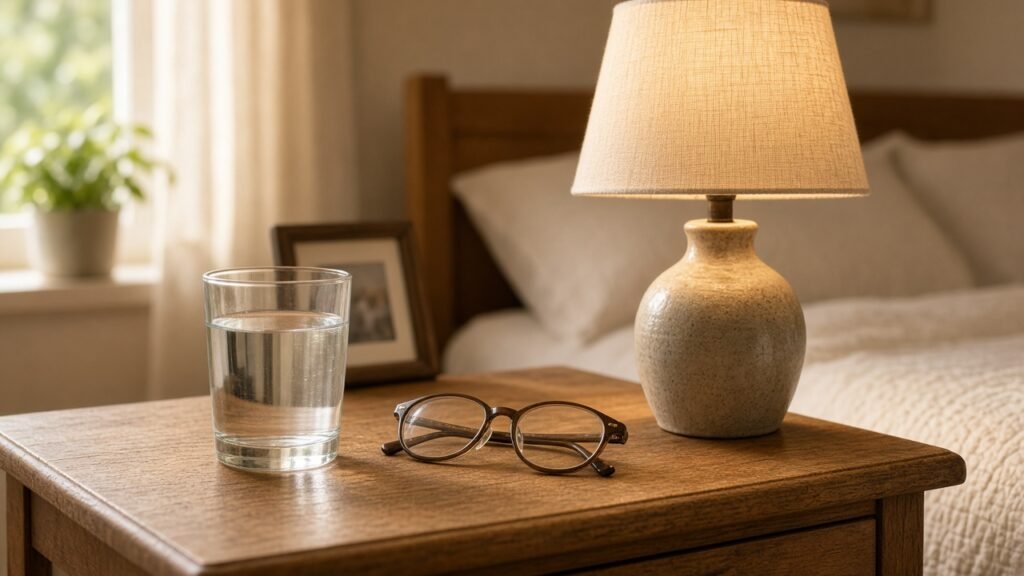
Early and common clues:
- Feeling thirsty (especially after 65, thirst often means you are already a bit behind)
- Dark yellow or strong-smelling urine
- Dry mouth, lips, or eyes
- Headache, fatigue, or feeling “less sharp”
- Lightheadedness when sitting up or standing
- Fewer bathroom trips than usual, or constipation that is new or worse
- Muscle cramps or unusual weakness
More urgent warning signs — seek medical care promptly:
- Confusion, marked drowsiness, or sudden behavior change
- Fainting, inability to keep fluids down, or very little urine
- Rapid heartbeat, chest pain, or severe dizziness
- Signs of heat illness during hot weather
Caregivers: if a loved one seems suddenly foggy, check fluids and ask a clinician — dehydration and infection can look alike.
Benefits of Steady Hydration (Without the Hype)
Staying consistently hydrated will not reverse aging or cure chronic disease. What it can support, for many people, is everyday steadiness:
- Clearer thinking and more stable energy through the afternoon
- Better digestion and less constipation risk when fiber and mobility are also in place
- Support for blood pressure stability and kidney stone risk reduction in people prone to stones (ask your clinician)
- Help processing medications that need adequate fluid
- Lower risk of falls linked to dizziness from low fluid volume
Treat these as supportive benefits, not guarantees. Pair hydration with movement you can do safely, balanced meals, and regular check-ins with your care team.
Simple Habits That Make Drinking Easier
Willpower alone rarely works when thirst is quiet. Build cues into the day you already have.
Try these senior-friendly tactics:
- Start with a morning glass. Keep a filled glass or marked bottle by the bed or coffee maker. Drink before the first screen or news cycle.
- Use medication times as fluid times. A full glass with each pill dose adds up without a special “water project.”
- Sip small and often. Many older adults tolerate frequent half-cups better than large gulps that feel heavy or rush them to the bathroom.
- Carry a bottle you like. A lightweight bottle with clear volume marks turns abstract goals into something you can see. A straw helps some people drink more comfortably.
- Flavor without a sugar flood. Lemon, orange, cucumber, a few berries, or a splash of juice in sparkling water can make plain water more inviting.
- Pair drinks with meals and snacks. Sips between bites, a cup of broth mid-afternoon, or herbal tea with a friend all count.
- Do not “solve” incontinence by drying out. Cutting fluids can worsen irritation and concentration of urine. Ask your clinician about bladder strategies instead of skipping water.
- Limit alcohol and go easy on very sugary drinks. Alcohol does not help hydration goals; sugary sodas add calories without much nutrition. Moderate coffee or tea can still count toward fluid for most people — water remains the best default.
Hydrating Foods and Fluids Beyond Plain Water
You do not have to meet your whole target with plain water. Food and other beverages matter — and they are often easier to enjoy.
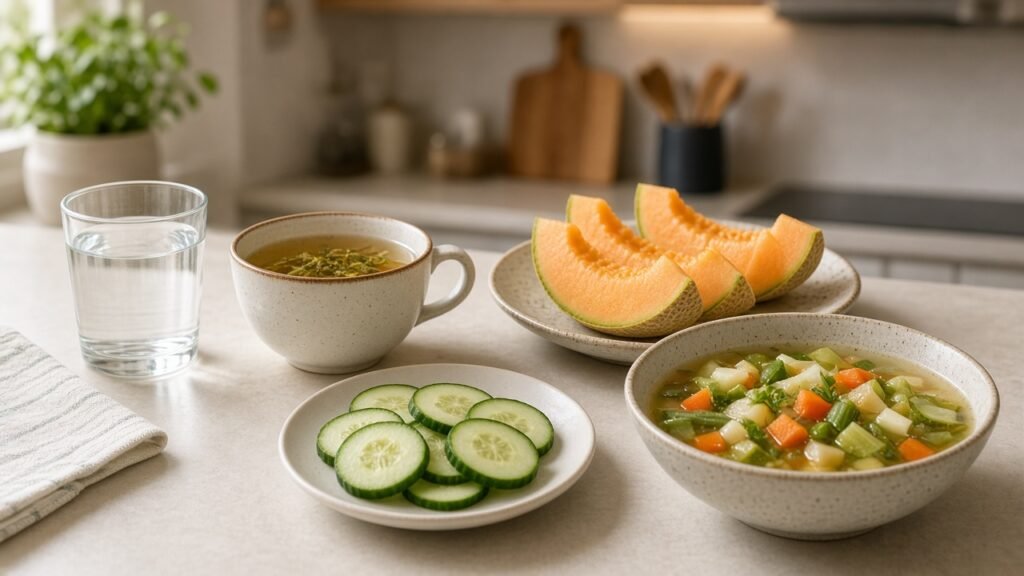
Drinks that usually count toward your daily fluid goal:
- Water (still or sparkling)
- Herbal teas and most regular tea or coffee in moderation
- Milk or fortified plant milks you tolerate
- Broths and clear soups (choose lower-sodium options when possible)
- Diluted fruit juice or flavored seltzer without heavy added sugar
Water-rich foods that quietly help:
- Cucumber, lettuce, tomatoes, celery, bell peppers
- Melon, berries, oranges, apples, grapes
- Yogurt, cottage cheese (if they fit your eating pattern)
- Soups and stews with vegetables
Aim for color on the plate and a drink within reach at meals. If chewing or swallowing is difficult, ask a clinician or dietitian about softer, high-fluid options that are safe for you.
Heat, Illness, and Special Situations
Warm weather: Drink on a schedule (for example, a few ounces every hour you are awake outdoors), rest in shade or cool rooms, and watch for dizziness or confusion. Older adults are less tolerant of heat stress.
Stomach bugs or fever: Fluid needs rise. Small, frequent sips of water, broth, or oral rehydration products your clinician recommends are often easier than large glasses. Seek care if you cannot keep fluids down or feel markedly worse.
Fluid restrictions: If you have a written limit, measure carefully, include soups and ice, and ask which beverages count. Do not use general “drink more” advice over a personalized medical plan.
Exercise: A little water before, sips during if you are out longer, and fluids after helps replace sweat — especially on warm walking days.
When to Talk With Your Clinician
Call or visit sooner rather than later if:
- You have ongoing dizziness, confusion, fainting, chest pain, or very dark / scant urine
- You cannot keep fluids down for more than a short illness window your clinician advises
- You have heart, kidney, or liver disease and are unsure of your fluid target
- Incontinence, frequent night urination, or fear of accidents is causing you to restrict drinks
- A new medication (especially a diuretic) coincided with new fatigue or lightheadedness
Bring a simple log: what you drank, approximate amounts, urine color notes, and any dizziness. That picture helps your clinician give a safer personal target than any article can.
A Calm Daily Hydration Routine You Can Start Tomorrow
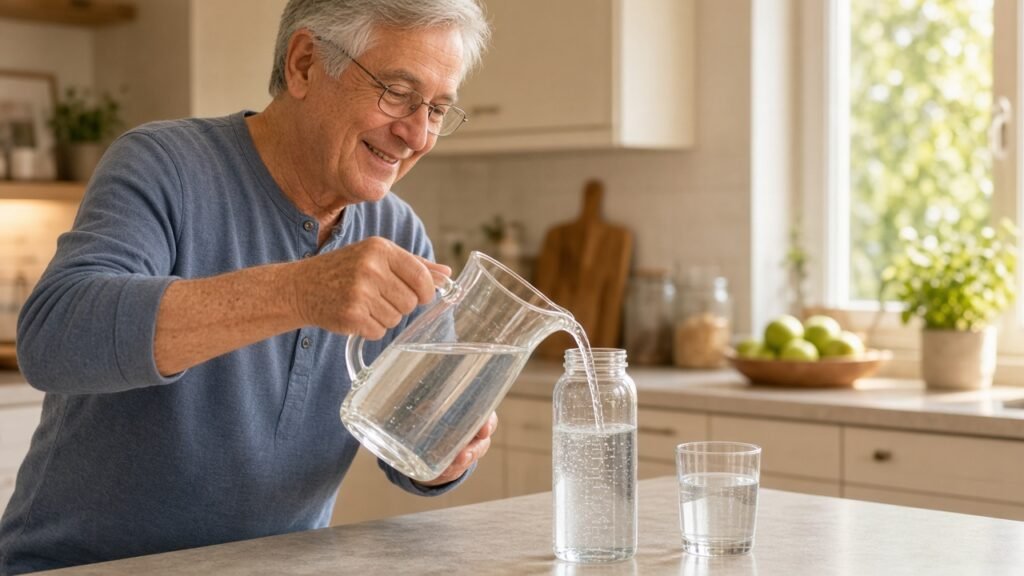
Use this as a starter template — shrink or expand with your clinician’s advice.
| Time | Habit |
|---|---|
| Wake-up | 1 glass of water before coffee or tea |
| Breakfast | Water or milk with the meal; fruit on the side |
| Mid-morning | Sip from a marked bottle (aim for a visible line) |
| Lunch | Soup, water, or herbal tea with food |
| Afternoon | Another bottle segment + a water-rich snack (yogurt, melon, cucumber) |
| Dinner | Water with the meal; go easy on alcohol |
| Evening | Smaller sips if night bathroom trips bother you — do not eliminate fluids entirely |
Weekly check-in questions:
- Was my urine mostly pale yellow most days?
- Did I feel less afternoon fog when I sipped on schedule?
- Do I need to ask about fluid limits or bladder support at my next visit?
Soft Takeaways
Hydration after 60 is less about perfect glass counts and more about steady, enjoyable fluids plus water-rich foods — timed through the day because thirst may not remind you in time. Start with a realistic beverage range (often around 6–8 glasses for many healthy older adults, or the ESPEN-style 1.6–2.0 liters of drinks), watch early signs like dark urine and dizziness, and respect any medical fluid restriction you have been given.
You do not need a complicated system. A morning glass, a marked bottle, fluids with medications and meals, and a few juicy foods on the plate are enough to begin. If something feels off — confusion, fainting, swelling, or ongoing lightheadedness — treat that as a reason to call your clinician, not a reason to push harder alone.
Grow Your Health. Improve Your Life.
Educational content only. Not a substitute for personalized medical advice. Discuss fluid goals with your health care professional, especially if you have heart, kidney, or liver conditions.