

If you are over 60, vitamin D may not be the first thing you think about when you want to stay strong. Protein, walking, and balance exercises get more attention — and they deserve it. Still, vitamin D quietly supports the systems that keep you steady: bones that hold up under daily life, muscles that respond when you stand, and a body that can use calcium the way it should.
Many older adults get less vitamin D than they did at 40. Skin makes less of it from sunlight. More time may be spent indoors. Appetite or diet patterns can leave fortified foods off the plate. The good news is that vitamin D after 60 is usually manageable with a clear plan — food first where you can, a sensible supplement when needed, and a conversation with your clinician when risk factors or symptoms show up.
This guide is educational, not a personal prescription. Kidney disease, osteoporosis treatment, certain medications, and confirmed deficiency can change what dose is right for you. Use what follows as a practical map, then personalize it with your health care team.
Why Vitamin D Matters More After 60
Vitamin D helps your body absorb calcium from food. Without enough of it, calcium cannot do its full job in bones and teeth. Over time, low vitamin D is linked with softer, weaker bones and a higher chance of fractures — especially when osteoporosis is already in the picture.
That is only part of the story. Your muscles and nerves also rely on vitamin D for normal function. When levels run low for a long stretch, some people notice:
- Achy or weak muscles
- Bone discomfort that is hard to pin down
- Extra fatigue that does not match sleep alone
- A feeling of being less steady on the feet
Researchers continue to study vitamin D’s roles in immunity, mood, and metabolic health. Results are mixed, and supplements are not a miracle shield against every age-related condition. What is clearer — and more useful for everyday decisions — is vitamin D’s established role in bone and muscle support, especially when intake has been low.
After 60, that support matters because recovery from a fracture or a long bout of weakness can take longer. Protecting bone density and muscle comfort is one of the quieter ways to protect independence.
Why Older Adults Often Fall Short
Several age-related changes stack on top of each other:
Skin and sun. Your skin becomes less efficient at making vitamin D when sunlight hits it. Living farther from the equator, spending winters indoors, covering most of the skin, or using sunscreen (which is still important for skin cancer prevention) can reduce production further. Window glass does not count as true outdoor UV exposure for vitamin D.
Diet gaps. Very few foods are naturally rich in vitamin D. If you rarely eat fatty fish and do not use fortified milk, plant milks, or cereals, intake can stay low without you noticing.
Absorption and body stores. Conditions that affect fat absorption (such as celiac disease, Crohn’s disease, or some weight-loss surgeries), obesity, and certain liver or kidney problems can change how vitamin D is absorbed or activated. Some medications also interfere.
Lifestyle. Homebound adults, nursing-home residents, and people who rarely go outside are among the highest-risk groups.
None of this means deficiency is inevitable. It means a little intentional planning after 60 is wiser than assuming “I get enough from the sun.”
How Much Vitamin D Do You Need After 60?
U.S. dietary guidelines commonly recommend:
- Ages 51–70: about 600 IU (15 mcg) per day
- Ages 71 and older: about 800 IU (20 mcg) per day
Those amounts are Recommended Dietary Allowances (RDAs) for generally healthy people and include vitamin D from food, fortified products, and supplements combined.
Recent Endocrine Society guidance (2024) has also shaped how clinicians talk about testing and “extra” supplementation in healthy adults. In broad terms for people without a special medical indication:
- Many healthy adults should meet the RDA rather than chase very high doses.
- Routine blood testing is not recommended for everyone.
- For adults 75 and older, empiric daily supplementation is often discussed because of possible benefits seen in trials (doses in studies varied; many were in a modest daily range).
- When supplementation is used in older adults, daily lower doses are generally preferred over intermittent megadoses.
Some clinicians and senior-nutrition resources still find that about 800–1,000 IU daily is a practical target for many older adults who do not get much from food or sun — but that is not a one-size-fits-all rule. Confirmed deficiency, malabsorption, osteoporosis protocols, or high-risk conditions may call for a different plan, sometimes with short-term higher doses under medical supervision.
Upper limit for most adults: do not casually exceed 4,000 IU (100 mcg) per day from all sources unless your clinician specifically directs a higher temporary dose. More is not automatically better.
Think of the RDA as your baseline compass. Food labels, a simple supplement, and — when appropriate — a 25-hydroxyvitamin D blood test help you fine-tune.
Signs You Might Be Running Low
Mild shortage can be silent. When symptoms appear, they are often vague:
- Ongoing tiredness
- Bone pain or tenderness
- Muscle aches, cramps, or weakness
- Mood changes (sometimes described as feeling “down”)
Severe, long-standing deficiency can contribute to osteomalacia (soft bones) in adults and worsen fracture risk when bones are already thin.
Because these symptoms overlap with many other conditions, do not self-diagnose from a checklist alone. If you have risk factors — limited sun, darker skin, very low dairy/fish intake, malabsorption, obesity, or unexplained muscle/bone discomfort — ask your clinician whether a 25(OH)D blood test makes sense for you.
Best Food Sources of Vitamin D for Seniors
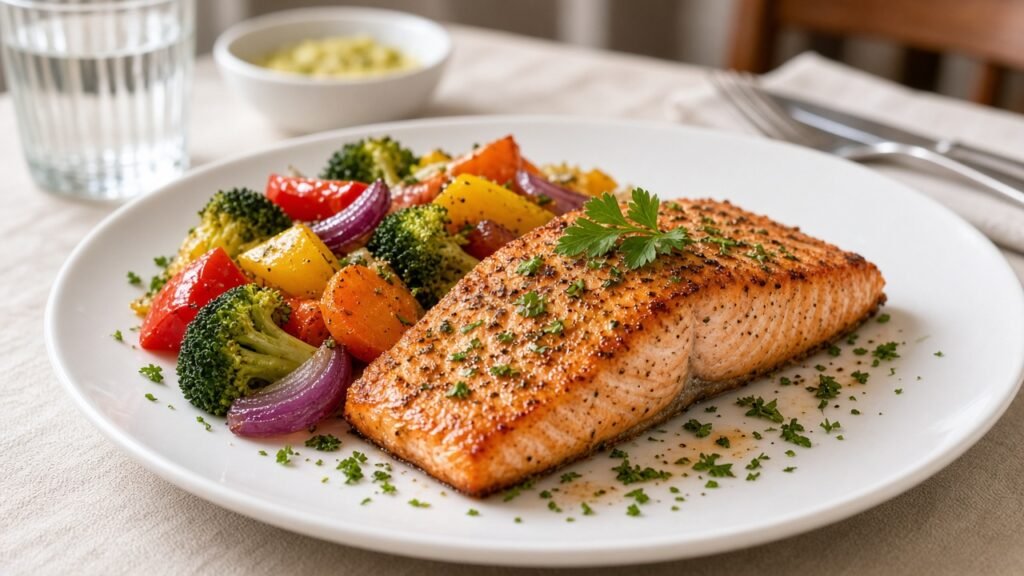
Food will rarely cover everything after 60, but it still helps — and it pairs well with protein and overall nutrition goals.
Naturally higher options
- Fatty fish such as salmon, trout, tuna, mackerel, or sardines (a few ounces can deliver a meaningful amount)
- Egg yolks
- Some mushrooms (especially those exposed to UV light — check the label)
- Small amounts in beef liver and some cheeses
Fortified favorites (check the Nutrition Facts panel)
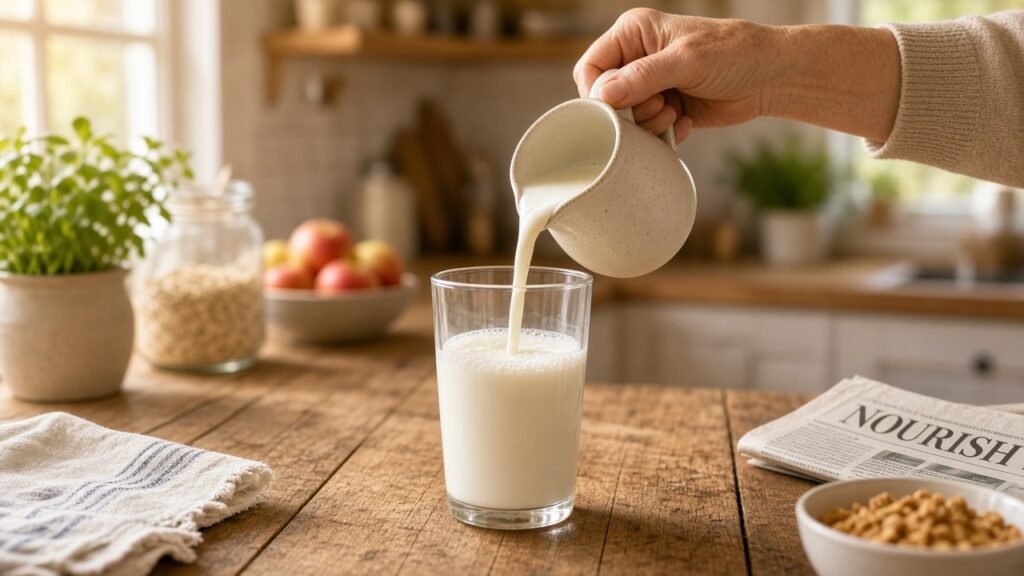
- Cow’s milk and many fortified soy, almond, or oat milks
- Some yogurts and orange juices
- Many breakfast cereals
- Some margarines and other fortified products
Practical senior tips
- Make breakfast count: fortified cereal or milk + eggs is an easy start.
- Aim for fish a couple of times a week if you enjoy it and it fits your diet.
- If dairy is hard on your stomach, fortified plant milks can fill a similar vitamin D role — just confirm the label.
- Cod liver oil is very high in vitamin D but also high in vitamin A; do not add large amounts without advice.
Sunlight After 60: Helpful, Not a Complete Plan
Short periods of outdoor daylight can support vitamin D production and also lift mood and encourage walking. Still, after 60 it is risky to rely on sun alone:
- Production is less efficient with age.
- Darker skin needs more exposure to make the same amount.
- Geography, season, and time of day matter a lot.
- Unprotected sun raises skin-cancer risk.
A balanced approach: enjoy safe outdoor time for movement and wellbeing, use sunscreen for longer exposures as dermatologists recommend, and cover the rest of your vitamin D needs with food and, if needed, a supplement. You cannot “overdose” on vitamin D from sun the way you can from pills — but you can damage your skin.
Supplements After 60: D2, D3, and Smart Habits
When food and lifestyle are not enough, supplements are common and often useful.
D2 vs D3. Both raise blood levels. Vitamin D3 (cholecalciferol) is widely available over the counter and often raises and maintains levels a bit more effectively than D2. Many senior-focused plans use D3 unless your clinician prefers otherwise.
Take it with a little fat. Vitamin D is fat-soluble. A meal or snack that includes some fat (yogurt, eggs, nuts, olive oil, fish) can help absorption.
Daily beats mega-pulse for most people. Unless your clinician prescribes a weekly high-dose protocol for deficiency, a modest daily amount is usually the safer, simpler habit.
Multivitamin or single nutrient? Either can work. Read the label so you know how many IU you are already getting before you stack a second bottle on top.
Do not treat a lab number yourself with megadoses. High-dose correction belongs in a clinician’s plan, with follow-up labs when needed.
Testing, Safety, and When to Call Your Clinician
Blood test. The usual measure is 25-hydroxyvitamin D [25(OH)D]. Rough consumer guideposts from NIH materials (your lab’s reference range may vary):
- Around 20 ng/mL (50 nmol/L) or above is generally considered adequate for bone health for most people.
- Below 12 ng/mL (30 nmol/L) is too low and may weaken bones.
- Very high levels (for example above 50 ng/mL / 125 nmol/L, and especially extreme values) can be harmful.
Healthy adults without special indications often do not need routine yearly screening. Testing is more useful when you have symptoms, risk factors, bone disease, malabsorption, or a treatment plan that depends on the number.
Too much vitamin D almost always comes from supplements, not sun. Excess can raise blood calcium and lead to nausea, thirst, confusion, kidney stones, or worse in severe cases.
Interactions to mention to your pharmacist or doctor include (examples, not a full list): thiazide diuretics, digoxin, certain seizure medicines, steroids, orlistat, and some cholesterol drugs. Always share your full supplement list.
See a clinician sooner if you have: unexplained bone pain, recurrent falls or fractures, known osteoporosis, kidney disease, digestive disease affecting absorption, or plans to take more than standard over-the-counter amounts.
A Simple Daily Vitamin D Plan After 60
Use this as a starter template and adjust with your clinician:
- Know your baseline. Glance at food labels for a few days. Are you getting fortified milk/cereal and any fatty fish?
- Hit the age-based RDA. Aim for about 600 IU (through age 70) or 800 IU (71+) from food + supplement combined, unless told otherwise.
- Add a modest daily D3 if diet is thin. Many older adults land near 800–1,000 IU total from a simple daily habit — confirm what fits your labs and meds.
- Pair with calcium-smart eating. Vitamin D helps you use calcium; include dairy or fortified alternatives, leafy greens, or other calcium sources as your diet allows.
- Stay consistent. Morning with breakfast works for many people.
- Protect skin outdoors. Walk in daylight when you can; do not chase sunburns for vitamin D.
- Revisit yearly. Medications, appetite, and mobility change. Ask at your next checkup whether your plan still makes sense.

Soft Takeaway
Vitamin D after 60 is less about perfection and more about a steady, sensible habit. Bones and muscles need the building blocks they can actually use. Food helps. Safe daylight helps. A modest daily supplement often closes the gap. What does not help is ignoring deficiency risk — or swinging to megadoses without guidance.
Grow your health with small, repeatable choices. Improve your life by protecting the strength that keeps you moving through ordinary days — grocery bags, garden steps, and getting up from a favorite chair with confidence.
If you are unsure where you stand, bring this topic to your next appointment. A short conversation — and, when appropriate, one blood test — can turn guesswork into a plan you can trust.
Educational content only. Not medical advice. Always consult your clinician or a registered dietitian before starting, stopping, or changing supplements, especially if you have kidney disease, high calcium levels, osteoporosis treatment protocols, or take prescription medications.